Botanical Basics
- Common Name(s): Damiana
- Folk Name(s): Mexican Damiana, Old Woman’s Broom, Mizibcoc, Hierba de la Pastora
- Scientific/Latin Name: Turnera diffusa (syn. Turnera aphrodisiaca)
- Family: Passifloraceae (Passionflower family)
- Plant Type: Small aromatic shrub, perennial
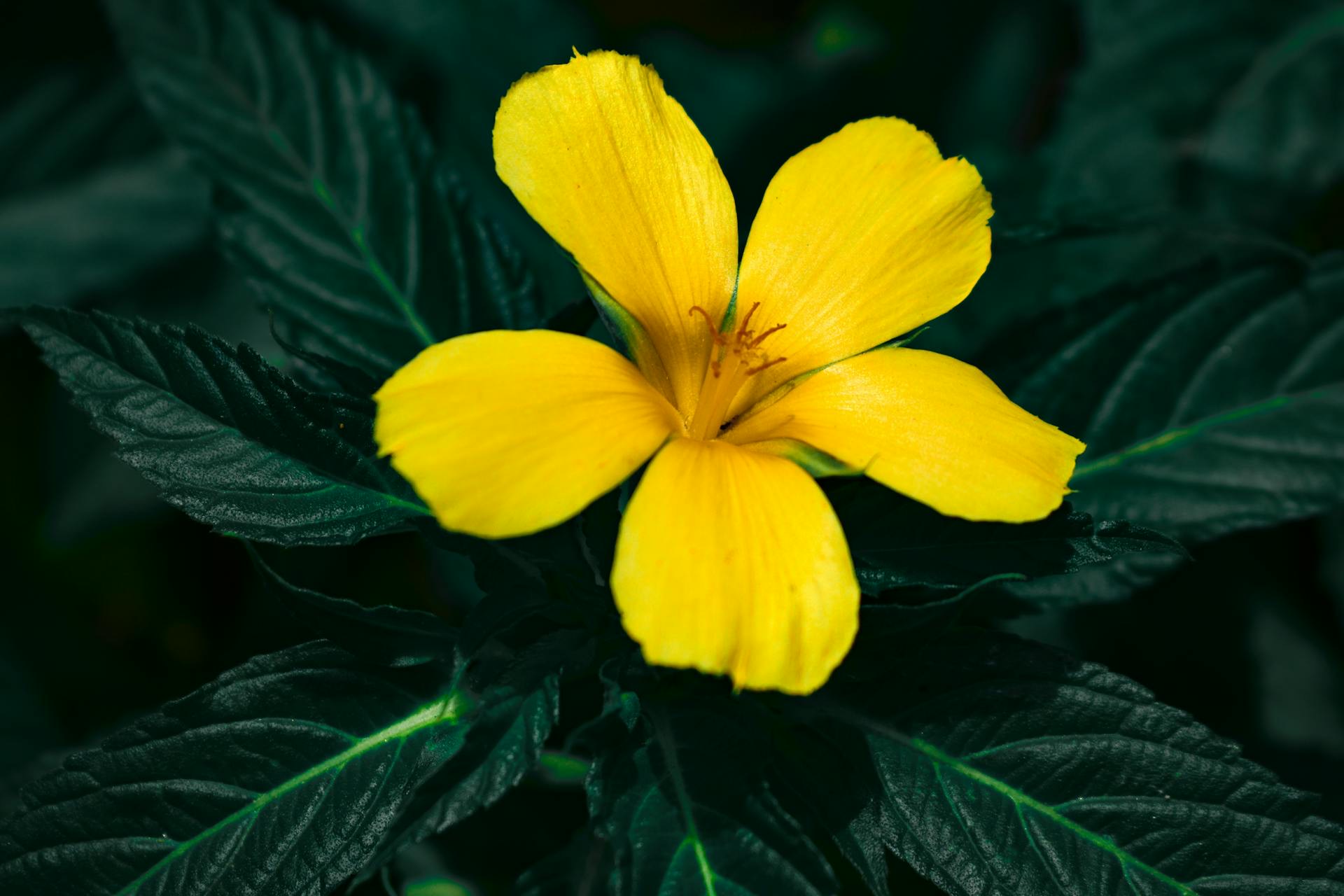
- Botanical Description: Grows 1–6 feet tall with slender, woody stems; small serrated, aromatic leaves; fragrant yellow flowers; produces small fig-like fruits with a sweet aroma.
- Growing Zones/Climate: Prefers warm, subtropical to tropical climates; hardy in USDA zones 9–11.
- Best Zones for Growth: Southwestern U.S., Mexico, Central & South America, Caribbean.
- Habitat & Range: Native to southern Texas, Mexico, Central America, West Indies, and parts of South America.
Cultivation & Harvest
- Soil & Sun Requirements: Sandy or rocky, well-drained soils; thrives in full sun with good heat tolerance.
- Propagation: By seeds or cuttings; cuttings root best when semi-woody.
- Companion Planting: Pairs well with other drought-tolerant herbs (sage, rosemary, oregano).
- Harvesting Guidelines: Harvest leaves and flowering tops when in bloom; best in late summer.
- Drying/Preservation: Air-dry leaves in shade; store in airtight containers away from moisture and sunlight.
Traditional & Historical Use
- Cultural Significance: Revered by Indigenous peoples of Mexico for its aphrodisiac and tonic qualities. Used in traditional love potions and ceremonies.
- Traditional Medicine: Mayan and Aztec healers used it for boosting mood, sexual vitality, and digestive health. Mexican folk medicine uses it for “nervios” (anxiety) and female reproductive balance.
- Symbolism: Associated with passion, vitality, and freedom of spirit.
Medicinal & Practical Properties
- Active Constituents: Flavonoids, terpenes, thymol, damianin (a bitter substance), essential oils, arbutin.
- Medicinal Uses:
- Aphrodisiac and libido support (both men and women)
- Nervine (relaxant for anxiety, stress, depression)
- Mild antidepressant and mood enhancer
- Digestive stimulant and mild laxative
- Menstrual regulator, cramp relief
- Preparation Methods:
- Tea/infusion (dried leaves steeped in hot water)
- Tincture (alcohol extraction)
- Smoking herb (often blended with other herbs)
- Capsules or extracts
- Dosage & Guidelines: Typically 2–4 grams dried leaf per cup of tea, taken up to 3x daily. Tincture: 2–4 ml, 2–3x daily.
- Safety/Precautions:
- Avoid during pregnancy and breastfeeding.
- May lower blood sugar (caution with diabetes).
- In large doses can act as a laxative.
- Possible interaction with alcohol or sedatives.
Magical & Spiritual Properties
- Elemental Association: Fire (sometimes Air)
- Planetary/Deity Correspondence: Venus, sometimes Eros or Freyja
- Magical Correspondences: Love, passion, lust, psychic dreams, liberation from repression
- Ritual Use: Burn as incense to invoke passion, place in sachets or love charms, brew tea before divination or dream work, add to baths for sensual energy.
- Symbolism in Divination/Dreams: A symbol of desire, release of inhibition, and emotional healing.
Ecological & Culinary Uses
- Pollinator Value: Its flowers attract bees, butterflies, and small pollinators.
- Wildlife Uses: Fruits are eaten by birds; leaves provide cover for small insects.
- Culinary Uses: Leaves are sometimes used to flavor liqueurs (notably in a Mexican liqueur called “Damiana”), and in traditional herbal tonics.
Household/Practical Uses
- Used as a base in herbal smoking blends.
- Can be infused in oils for sensual massage blends.
- Historically brewed into tonics and cordials.
Fast Facts
- Quick Uses: Aphrodisiac tea, love charm herb, calming smoke blend.
- Notable Traits: Strong aromatic fragrance; once banned in some areas for its reputed effects.
- Special Notes: Known as a “spirit liberator”—used in both ritual and everyday life to uplift mood.
Supporting Notes
- References:
- Tierra, Michael. The Way of Herbs.
- Chevallier, Andrew. The Encyclopedia of Herbal Medicine.
- Grieve, M. A Modern Herbal.
- Duke, James. Handbook of Medicinal Herbs.
- Traditional use records from Mayan, Aztec, and Mexican folk medicine

No comments:
Post a Comment